
Search suggestions for “systeme io black friday” spike every November, and this year the people typing it want one thing: whether a Systeme.io discount is coming, or whether they should pay for Startup now. The question deserves a straight answer, because this vendor publishes one price list, sells it to beginners on tight budgets, and a seasonal cut would leave money on the table for anyone who bought in October.
Checked on 24 November 2026, Systeme.io runs no Black Friday or Cyber Monday promotion. Its home page carries no discount language, the pricing page shows $0, $17, $47 and $97 with no badge or strikethrough, and the sitemap index declares 1,437 feeds with zero promotional URLs. The one standing reduction is the annual toggle, which removes two months of billing.
To settle it we read the vendor’s pricing page in both billing modes, its terms of service, two help articles on billing and cancellation, and the structured price data embedded in the page. Then we pulled fifteen archived copies of that same pricing page between 2021 and this week, plus archived home pages from four previous Novembers, to see what the company did in past holiday seasons. Every multiplication below was recomputed in Python instead of copied from promotional copy.
Executive Summary
A holiday discount is the wrong thing to wait for on this platform. The published price is already low enough that the annual toggle does more for a buyer than any November promotion has done here, and five years of archives show the plan price barely moving with the calendar. The real risk sits elsewhere: the subscription charge is not refundable once taken.
- Best For: A creator or coach under 5,000 contacts who wants one bill covering funnels, email, courses and checkout, and who will pay yearly to remove two months of charges.
- Pricing: Free $0, Startup $17, Webinar $47 and Unlimited $97 a month, or $170, $470 and $970 a year. All four read from the vendor’s pricing page on 24 November 2026.
- Strength: The annual toggle is worth 16.7% on every paid tier, applies without a code, and stacks with a free migration that the vendor runs on yearly plans.
- Drawback: No refund on subscription payments. A year paid up front stays paid, which raises the cost of picking the wrong tier far above the cost of a missed sale.
Short on time? The verified offers table answers the cost question in four rows.
Table of Contents
- Systeme io Black Friday 2026: What the Price Page Shows
- What We Checked and What the Evidence Shows
- The Bill You Face Every Month When Nobody Is Running a Sale
- Every Systeme.io Offer We Could Verify, Priced Out
- What the Annual Discount Is Actually Worth
- Past Black Friday and Cyber Monday Offers: What Systeme.io Actually Ran
- Why a Seasonal Sale Matters Less Here Than You Think
- The Cheapest Way to Buy Systeme.io: Four Legitimate Routes
- What the Discount Does Not Cover
- Does the Discount Change What You Get?
- One Automation Rule That Covers the Monthly Difference
- How to Claim the Best Price Today, Step by Step
- Imagine a Coach Whose List Doubled in Six Weeks
- What Waiting Actually Costs You Between Now and January
- FAQ
Systeme io Black Friday 2026: What the Price Page Shows
Nothing. On 24 November 2026 the vendor sells the same four plans at the same four prices it charged in October. Three checks agree with each other: the home page contains no seasonal wording across 280,625 characters of markup, the pricing page lists the four tiers without a badge, and the sitemap index carries no promotional URL in 1,437 feeds.
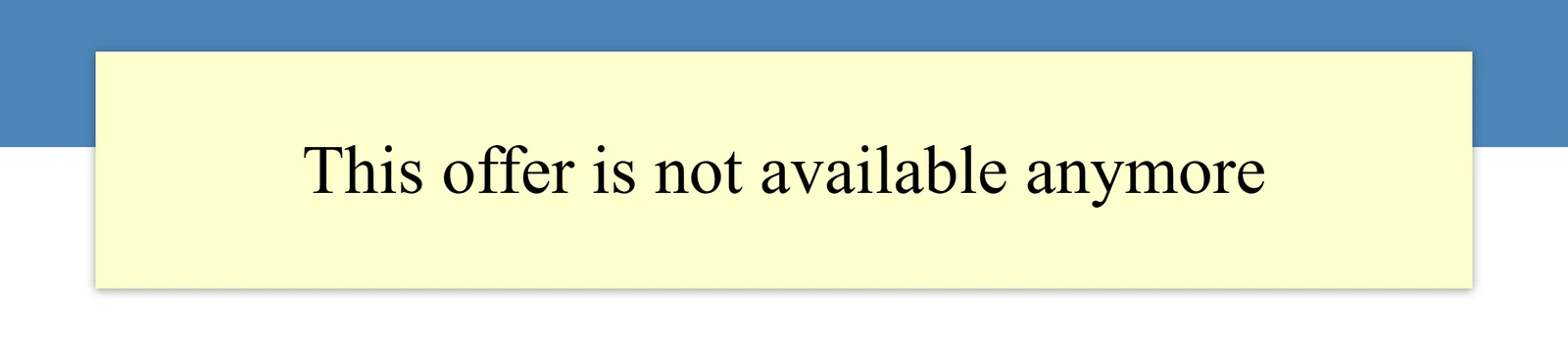
One page does look like a deal at first glance, and it is worth naming because a fast reader will find it before finding this article. systeme.io/black-friday returns a normal 200 response, so a crawler logs it as a live page. Its rendered text is 111 characters: a heading reading “Page inactive” and a line reading “This offer is not available anymore”. Nothing is on sale behind it.
A second address, spelled without the hyphen, behaves differently and gets its own section further down. For the question in this heading, the answer stays the same whether you search the brand name with or without the dot.
What We Checked and What the Evidence Shows
A promotion can hide from a home page and still exist inside a checkout, so the check covered more than the banner. We read the pricing page in monthly and yearly mode, opened the structured pricing data embedded in its source, and downloaded the sitemap index the site publishes for search engines. Each source was pulled on the same day.
The pricing page states “Last updated: April 2026” in its closing FAQ, while the machine-readable block in the same file records a modification date of 20 October 2026. That means the page was edited five weeks before this article and still carries no seasonal block: no countdown, no promotional code field, no struck price. A discount that exists would appear in at least one of those three places.
What would change this answer is narrow and testable. A banner on the home page, an extra offer object in the structured data, or a fifth tier in the plan grid would each count. None appeared. The vendor could still launch something in the next thirty days, which is why the honest reading is “none yet” rather than “none this season”.
The Bill You Face Every Month When Nobody Is Running a Sale
Pricing here works off a contact meter rather than a feature gate. Every tier carries the same core tools, covering funnels, email, blog, courses, checkout and an affiliate program, and the tier you buy decides how many contacts, funnels and automation rules you can hold before the account stops taking more. That structure explains why the entry price is low and why the ceiling matters more than the feature list.
The free plan holds 2,000 contacts, three sales funnels, one blog, one course capped at 500 students, one affiliate program and one custom domain, with one automation rule and one email campaign available. Sending is unlimited on it. Two clauses deserve attention before anyone builds a business on that tier: the plan processes up to $10,000 in total sales, and an account with no login or activity for six months is deactivated.
Paying moves the meter, not the toolbox. Startup raises the ceiling to 5,000 contacts, ten funnels, ten automation rules and five courses. Webinar reaches 10,000 contacts, fifty funnels, 100 rules and twenty courses, and adds evergreen webinars. Unlimited removes the ceilings on contacts, funnels, rules and custom domains. A reader choosing between them is choosing a size, not a feature set.
Two of those ceilings bind sooner than buyers expect. Automation rules run out first on the free plan, because a single welcome sequence, a cart recovery and a webinar reminder already use three, and the free tier allows one. Courses run out next on Startup, where five products sounds generous until a seller bundles a mini-course with every offer. Neither limit appears in a promotional table, which is why the size question outranks the discount question.
Want to follow along in your own account while you read the numbers?
Every Systeme.io Offer We Could Verify, Priced Out
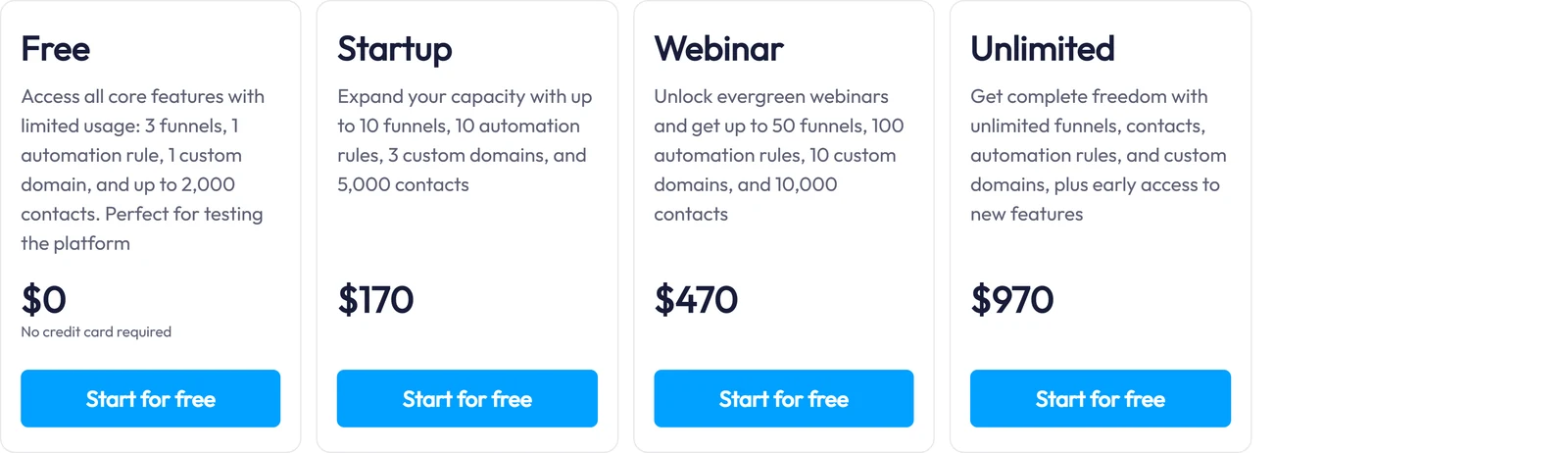
The annual toggle behaves like a second price list rather than a coupon. Clicking it on the pricing page swaps the displayed figure for a yearly total and attaches a “2 months free” label to the option. That label is arithmetic rather than marketing: a yearly subscription bills ten months at the monthly rate, and the remaining two months cost nothing extra.
Nothing else qualifies as an offer. There is no promo code field anywhere on the page, no seasonal tier, no bundle that trades features for a lower price, and no one-time purchase option sold on this platform. A reader hunting for a coupon will instead find referral URLs posted by other blogs, and those URLs change who gets paid, never what you pay.
The label sits on the option rather than on the plan card, which is why a reader scanning the four tiles can miss the reduction entirely: the tiles keep showing monthly figures until the toggle is clicked, and only the yearly view swaps in a different set of numbers. Anyone comparing screenshots taken on different settings will conclude the prices changed when nothing did.
The table below holds both published lists, monthly and yearly, with the effective monthly rate worked out so the two modes can be compared on one line. Read the third column against the second: a yearly subscriber on Startup pays the equivalent of $14.17 for a plan whose headline price is $17, and the difference compounds once a second and third year are stacked, because the toggle keeps applying at each renewal rather than only at signup.
| Plan | Pay monthly | Pay yearly | Effective monthly |
|---|---|---|---|
| Free | $0 | Not offered | $0 |
| Startup | $17 | $170 | $14.17 |
| Webinar | $47 | $470 | $39.17 |
| Unlimited | $97 | $970 | $80.83 |
Those are the four published prices, read in both billing modes on 24 November 2026.
What the Annual Discount Is Actually Worth
Two free months on a twelve month term equals one sixth of the annual cost, or 16.7% off, and the absolute saving scales with the tier. Startup saves $34 in a year, Webinar $94, Unlimited $194. Set against the price of the plans themselves, the discount is identical in proportion and very different in cash, which changes where it makes sense to claim it.
| Plan | Yearly price | Saved per year |
|---|---|---|
| Startup | $170 | $34 |
| Webinar | $470 | $94 |
| Unlimited | $970 | $194 |
Twelve monthly payments on the three paid tiers add up to twelve times the monthly rate, which is where the saved column comes from. Those totals matter because the yearly figure is not a discount against an unknown baseline: it is a fixed multiple of the monthly rate, so the saving grows with the tier even though the percentage stays put.
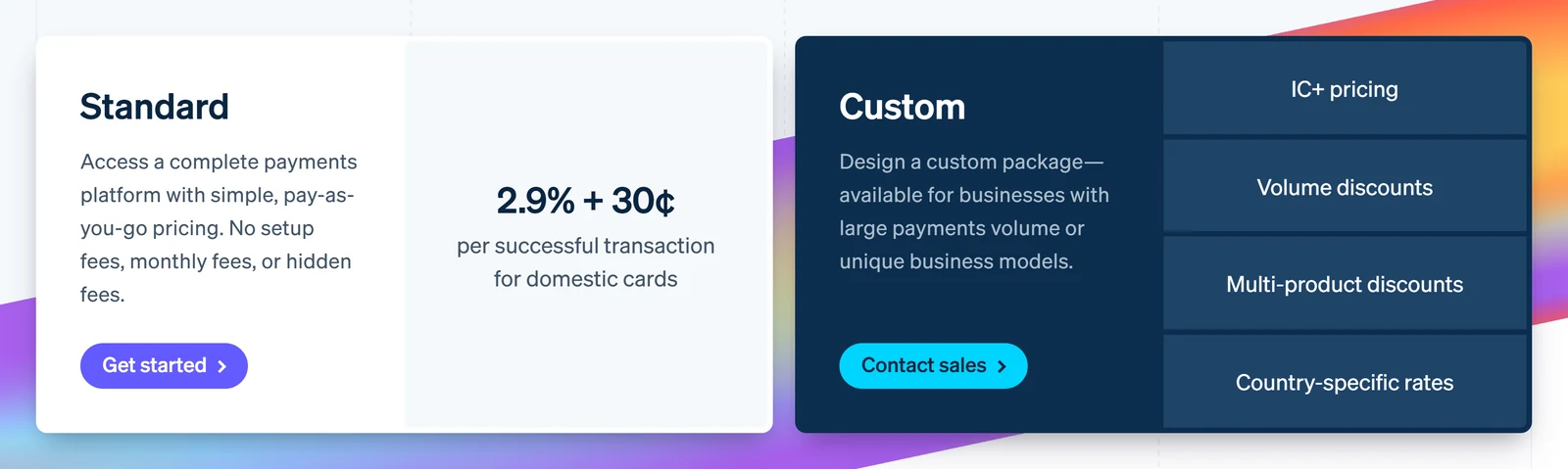
Take a specific buyer rather than an average. A course seller on Startup who takes $20,000 a year through Stripe on domestic cards pays the gateway 2.9% plus 30 cents a transaction, which on 200 sales of $100 comes to $580 in percentage fees and $60 in fixed fees. Platform plus payments total $810 for the year at the yearly price, and the $640 of gateway cost is nearly four times the $170 subscription. Cutting the subscription by 16.7% trims $34 from that bill, which is 4.2% of the total.
The same arithmetic explains why the yearly toggle is the only lever worth pulling here. On a $970 Unlimited subscription the gateway on $20,000 of sales still costs less than three months of the plan, so a reader optimizing the small number is optimizing the wrong line. Push sales volume up and the 0% transaction fee the vendor charges becomes the real saving, because the gateway rate stays the same regardless of tier.
Past Black Friday and Cyber Monday Offers: What Systeme.io Actually Ran
Archives answer the question a searcher is really asking, which is whether the company has a habit of discounting in late November. Fifteen captures of the pricing page between November 2021 and this week were pulled, along with archived home pages from four previous Black Friday weeks. The pattern is thin and easy to summarize: the plan grid stayed at list price, and the seasonal movement happened around courses rather than subscriptions.
| When | What the captured page showed | Reading |
|---|---|---|
| November 2021, 2022, 2023 | Home pages during Black Friday week carried no seasonal banner and no percentage discount | No subscription campaign |
| 29 November 2024 | Home page listed the same course prices, with no Black Friday wording | No subscription campaign |
| November 2025 captures | Pricing page showed the four tiers at list price, with the two month annual label | No subscription campaign |
| 26 November 2025 | The same price list, one day into that year’s holiday week | No subscription campaign |
One artefact is easy to mistake for history. The address without the hyphen, systeme.io/blackfriday, is still live and still sells a 30% off yearly subscription at 396 euros a year against a 47 euro monthly rate, a saving of 168 euros that the page states itself. An archived copy from September 2020 shows identical wording and identical figures, and the page has not changed since, so it belongs to 2020 rather than to this season. A reader who found it through an old blog post would be buying at a price the company left standing on a legacy page.
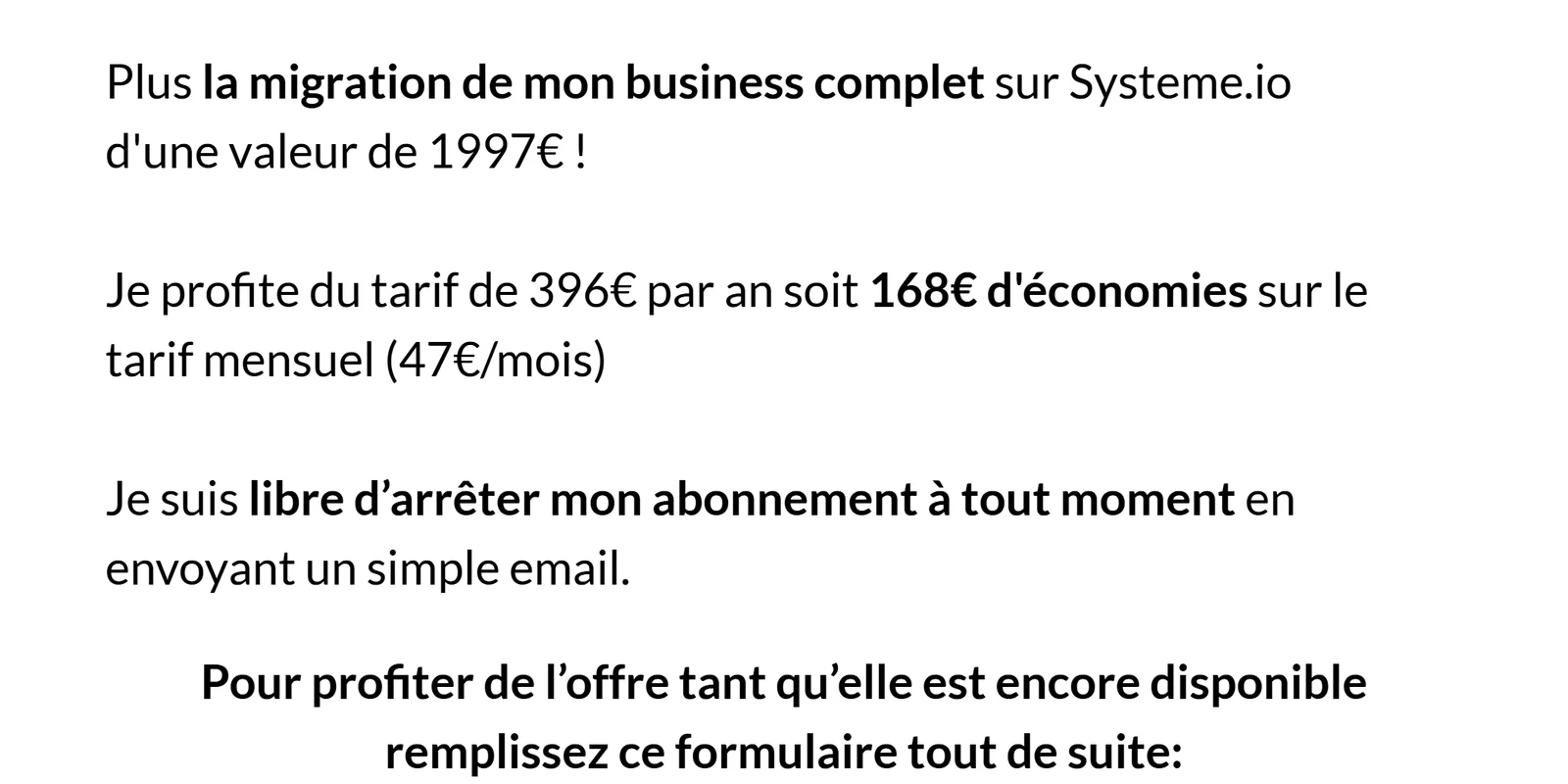
Two details make that archive useless as a forecast. The offer runs in French and asks for a country from a dropdown rather than a checkout, which marks it as a regional campaign from an earlier phase of the business. And the discount attaches to a yearly term at roughly 30%, which is steeper than the 16.7% the current toggle gives, so the legacy page is worth more on paper for that one tier and is still not a reason to use it: it sells an old French checkout, not the plan grid buyers compare today.
Why a Seasonal Sale Matters Less Here Than You Think
Most software discounts exist because list prices sit high enough that a percentage cut still leaves margin. This vendor prices against a stack of separate tools, and its own pricing FAQ makes that comparison explicitly: ClickFunnels at $97 a month for funnels, Mailchimp at $20 for email, Teachable at $39 for courses and Tapfiliate at $74 for an affiliate program, $230 a month before connecting anything. Against that anchor, a tier priced between $17 and $97 has little room to fall.
There is also a structural reason for the lack of a coupon culture. Sub-accounts are included on every plan, and each one inherits the limits of the parent subscription at no extra charge, so the vendor already gives away capacity that competitors bill for. A business running client funnels under one account receives the same value as twenty separate subscriptions, and a Black Friday percentage on top of that would cut into a margin the product does not carry.
So the practical question changes shape. Instead of asking when the price will drop, a buyer should ask which tier will still fit in twelve months, because the yearly price locks a limit as well as a rate. Underestimating contacts means paying twice: once for a year of Startup, then again for an upgrade when the list outgrows 5,000 names.
The Cheapest Way to Buy Systeme.io: Four Legitimate Routes
Four routes lower the effective cost without a coupon, and each suits a different situation. None of them requires waiting for a season, and all four are visible on the vendor’s own pages rather than in a promotional email. The table pairs them with the buyer they fit.
| Route | Who it fits | What it changes |
|---|---|---|
| Switch the toggle to yearly | Anyone past the trial-and-error stage | Removes two months of charges, 16.7% |
| Stay on the free plan to 2,000 contacts | First launch, single funnel, one course | Costs $0, no card required |
| Buy one paid plan, run clients as sub-accounts | Freelancers managing several brands | No second subscription |
| Claim free migration on a yearly plan | Anyone leaving another platform | Manual migration at no cost |
The migration route carries the largest hidden value and the longest wait. The vendor moves contacts, funnel pages, blogs, courses, emails and automations by hand, and the help article states that only an Unlimited monthly plan or any yearly plan qualifies; the average job takes 17 days. Buyers arriving from another platform should treat that queue as part of the switch rather than as an afterthought.
One more number appears in this conversation often enough to address directly. The affiliate program pays 60% commission for the life of a referred customer, and the help article notes that the referral attaches at signup, including on the free plan. That matters to creators who plan to recommend the tool, not to buyers looking for a discount, and no one-time purchase option exists on this platform at all.
What the Discount Does Not Cover
Three costs sit outside every figure quoted so far, and each one is larger than the discount for some buyers. The first is the payment gateway: the vendor charges 0% of transaction value, but Stripe or PayPal still take their own cut on every sale, and that cut scales with revenue rather than with the plan. A busy checkout can pay the gateway ten times what it pays the platform.
The second is tax on digital goods sold into the EU and UK, which sellers into those markets typically handle themselves rather than through the platform. The third is the absence of a refund on subscription charges: the terms of service state plainly that subscription plans are not refundable. Combined with an annual prepayment, that clause turns a wrong tier choice into a sunk cost rather than a mistake that can be undone.
Leaving has its own terms, and they belong in the same budget. Contacts, funnels and course content can be exported before a plan lapses, while the subscription fee itself carries no refund window at all, so a buyer who pays a year up front should test the platform on the free tier first and treat the yearly charge as a one-way commitment.
A fourth cost arrives when the plan ceilings stop matching the business. Blog SEO beyond the built-in editor, SMS reminders and deeper CRM pipelines usually sit outside an all-in-one tier, and the tools that cover them typically bill $20 to $100 a month each, which can outrun the platform subscription itself. That gap is the one a discount would never close, because it belongs to a different invoice.
A subscription canceled mid-month stays active until the day before the next payment date, and access ends when the paid term ends, so canceling on day fifteen of a monthly term leaves roughly two weeks of use. Anyone testing the platform against a deadline should count from the payment date rather than from the cancellation date.
Does the Discount Change What You Get?
The billing mode changes the invoice and nothing else. Yearly and monthly subscribers on the same tier receive the same contact ceiling, the same number of funnels, the same automation allowance and the same 0% transaction fee. Discounts on this platform are not tied to reduced features, and no seasonal campaign has ever shipped a stripped tier to make a price look better.
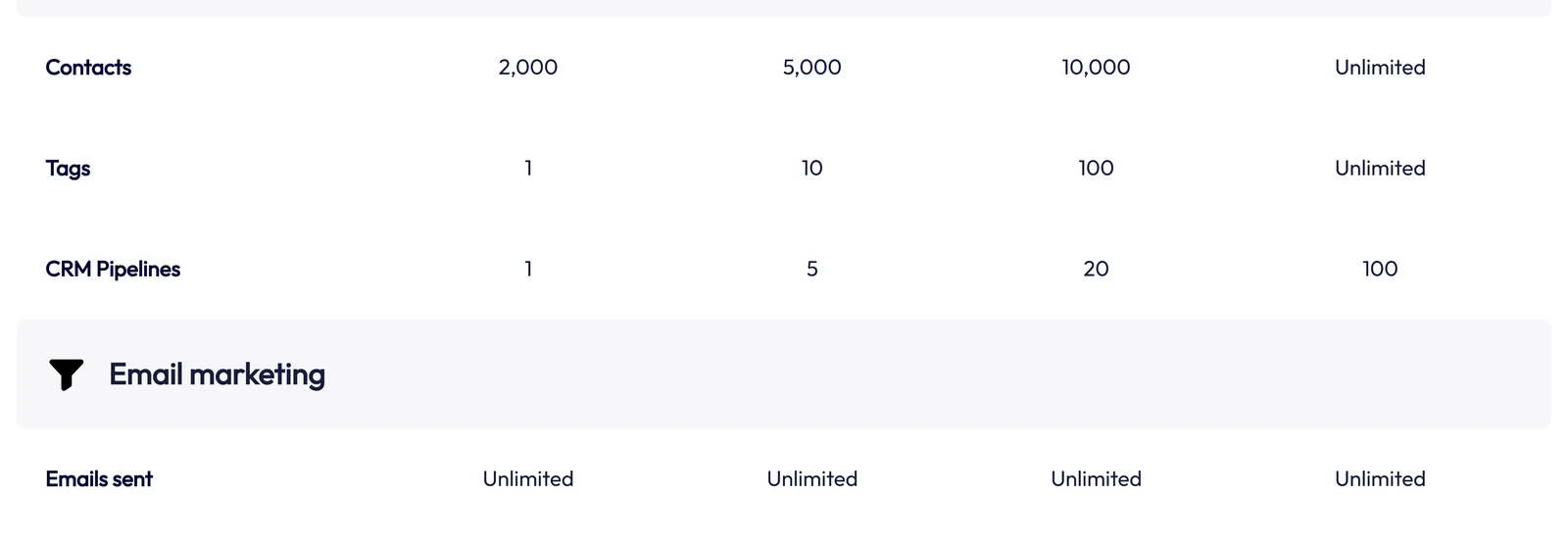
| Limit | Startup | Webinar | Unlimited |
|---|---|---|---|
| Contacts | 5,000 | 10,000 | Unlimited |
| Sales funnels | 10 | 50 | Unlimited |
| Automation rules | 10 | 100 | Unlimited |
| Courses | 5 | 20 | Unlimited |
| Custom domains | 3 | 10 | Unlimited |
Scoring the platform on the five jobs this site weighs for funnel and course software gives 8.43 out of ten, with the weights taken from the review methodology rather than adjusted to fit a conclusion. Value for money and funnel building carry the strongest marks, courses the weakest, and the gaps line up with what the plan grid actually sells.
| Job | Weight | Score |
|---|---|---|
| Funnels and pages | 25% | 9.0 |
| Email and automation | 20% | 8.0 |
| Courses and community | 20% | 7.0 |
| Payments and checkout | 15% | 8.5 |
| Value for money | 20% | 9.5 |
| Weighted total | 100% | 8.43 |
One Automation Rule That Covers the Monthly Difference
The cheapest tier includes ten automation rules, and one of them recovers more than the annual discount costs. The flow below follows a webinar signup that never converts, which is the leak most solo sellers cannot watch by hand. It uses the platform’s own blocks, and the messages are short enough to send as written.
- Trigger: Form submitted on the webinar registration page, tag “webinar-nov” applied automatically.
- Action: Send email, subject “Your seat is saved”, body naming the session date and one promised takeaway.
- Wait: 24 hours before the session start time.
- Action: Send email with the join link and a line reading “Reply with your biggest question and I will answer it live”.
- Wait: 18 hours after the session ends.
- If/Else: contact opened at least one email in the last three days, then go to the offer branch; otherwise go to the reminder branch.
- Action on the offer branch: Send email, subject “The replay and the $49 seat”, with the checkout link and a 72 hour window.
- Action on the reminder branch: Send email, subject “Missed the session, the replay is up”, no discount, single link to the replay page.
- If/Else: order paid, then remove tag “webinar-nov”; otherwise add tag “follow-up-warm” and stop.
That sequence replaces two tools that would otherwise need separate subscriptions, an email platform and a scheduling add-on, which is where the comparison against a $245 stack comes from. It also runs on the cheapest paid tier, so the automation allowance is not the limit that forces an upgrade.
How to Claim the Best Price Today, Step by Step
The cheapest legitimate route is the yearly toggle on the smallest tier that still fits your numbers. That switch removes two months of charges on any paid plan, worth 16.7% every year, and staying on the free tier costs nothing at all until the list passes 2,000 contacts. Pick the tier by counting contacts, funnels and courses, then allow a 50% margin so the yearly price does not lock in a ceiling you outgrow within twelve months. Five steps below put that order into practice, because two of them change the number the others depend on.
- Count your contacts, funnels and courses, then pick the smallest tier that still fits with a 50% margin, since the yearly price locks those limits for twelve months.
- Open the pricing page and switch the toggle from monthly to yearly; confirm the total changes before you create an account.
- Start with the free plan if the count fits under 2,000 contacts, and upgrade later without losing pages you already built.
- Move the toggle to yearly on the day you upgrade, not after the first monthly charge, because the yearly rate applies from the first billing cycle.
- If you are leaving another platform, request the free migration once the yearly plan is active, and plan around the 17 day average queue.
The step most people skip is the first. A buyer who picks a tier by feel and then discovers the contact ceiling four months later pays the difference as an upgrade at full rate, which erases the two free months and then some.
Imagine a Coach Whose List Doubled in Six Weeks
Imagine a coach selling a $300 group program, sitting on 2,400 contacts after a launch, who reads a blog post saying a holiday discount is coming and decides to wait. This is an illustrative scenario rather than a client story, and the arithmetic is the only part that travels to a real account.
Six weeks of a paid challenge take the list to 4,900 names, just under the 5,000 ceiling of Startup, so the free plan stops accepting new entries at 2,000 and the coach upgrades mid-campaign at the monthly rate. Three months of monthly billing cost $51 before the yearly switch. Buying yearly on day one would have cost $170 for the year, which is $14.17 a month, and the two free months alone are worth $34 against the twelve monthly charges a subscriber pays over the same period.
The same account faces a smaller risk that costs more. Courses on Startup cap at five and students on the free tier cap at 500, so a coach planning a second and third program has to count products rather than contacts. Neither ceiling appears on a discount banner, which is why the sizing question outranks the sale question.
What Waiting Actually Costs You Between Now and January
Waiting costs $34 on Startup and $194 on Unlimited over a full year, and that is the ceiling on what any missed promotion can be worth. Set that against a list that stops accepting signups at 2,000 contacts and the trade stops being close: the free plan ceiling will block a growing seller long before a seasonal sale would have helped.
Three questions decide it. If you already have an offer and a list, buy yearly today and stop paying attention to November. If you are still choosing what to sell, stay on the free plan and ignore the calendar. If you are leaving another platform, put the migration request in now, because the 17 day average runs longer than the shopping weekend everyone waits for.
One number settles the waiting question better than any opinion: contacts added per month. A list growing by 300 names a month reaches the 2,000 contact ceiling of the free plan in under seven months, and every contact collected after that point has nowhere to go until the account is upgraded. Track that figure for thirty days, compare it with the tier ceiling you are considering, and the decision stops being about November at all.
If that verdict matches the size of your list, yearly billing is the next step to take.
FAQ
Does Systeme.io run a Black Friday sale at all?
Nothing published suggests it does. Archived home pages from the holiday weeks of 2021, 2022, 2023, 2024 and 2025 carried no seasonal banner and no percentage cut on the plan grid, and the current price list shows the same four tiers at list price.
What is the deal people mention on forums?
Usually one of two things: this vendor’s legacy French page that still sells a discounted yearly term at 396 euros, or a competing platform’s genuine campaign. Neither reflects a live subscription offer on the current price list.
Is Cyber Monday worth waiting for?
Google offers no autosuggest results for the phrase attached to this brand, which means the query carries almost no search demand of its own. There is also no separate Cyber Monday page on the site, and the sitemap index lists none.
Should I pay monthly or yearly on my first paid month?
Yearly, if the tier choice is settled, because the two free months apply from the first cycle and the plan is not refundable afterwards. Monthly only makes sense while a buyer is still testing whether a tier fits.
Can I get money back if the plan turns out wrong?
The terms of service state that subscription plans are not refundable. Stopping the subscription halts the next charge and keeps access until the paid term ends, but the amount already billed stays billed.
Does an annual plan get anything extra besides the price?
Yes, one thing worth checking for anyone switching platforms: the free manual migration is available on any yearly plan, while monthly subscribers need Unlimited to qualify. The average migration takes 17 days.
Still deciding after the FAQ? Open the free plan and read your own limits page inside the account.
← Previous: How CreatorStackIQ checks prices and plan limits every month
Next →: Browse every Systeme.io review, guide and comparison
About the Author

Antonio Vance is B2B SaaS Operations Director & Lead Reviewer (CreatorStackIQ Editorial Team). He has spent 8+ years deploying and auditing enterprise CRM, marketing automation, and email deliverability infrastructures for digital agencies, including the funnels, checkouts, and follow-up sequences built on top of them. At CreatorStackIQ, he builds each review from the vendors’ published pricing pages, help-center documentation and changelogs, cross-checks them against verified user reviews, and re-checks prices and plan limits every month.
Some links on this page are affiliate links, including links to Systeme.io, so we may earn a commission at no extra cost to you; this never changes our scores or recommendations.
two months free beats waiting